
Allen County Crime News Sources
Start with official channels, not the front page. The Allen County Sheriff's Department posts news, runs a current-inmate search, and keeps a date-bounded activity log covering incidents countywide. Each entry has a number. It shows the reported date, the call type, and an address. Names and photos are absent. Social accounts add only selected items, and a logged call may end with no arrest at all. So treat the log as an incident feed, not a booking list.
Newsrooms pick their own stories. 21Alive/WPTA crime coverage leads for steady local reporting, with several stories on busy days. WANE 15 also follows Allen County arrests and court matters closely. The Journal Gazette keeps a Police/Fire section. WOWO folds police and court reports into its wider local-news stream. Photos vary by story: a booking shot one day, a courthouse image the next, sometimes nothing at all.
The News-Sentinel Lights & Sirens database works differently. It pulls Fort Wayne Police and Allen County Sheriff activity-log data into one searchable tool. You can filter by city, county, ZIP code, street, and call type. The site itself warns that initial calls get reclassified or turn out unfounded. No booking photos appear there. The irregular 180 Justice Indiana Case Files section does use mugshots, warrant images, and case narratives at times, but it is far from a systematic roster.
Allen County News Outlet Guide
The table sorts these options into three groups: official public channels, editorial reporting, and private booking collections. A source can be handy without telling the whole story. Photos alone never answer whether someone is still in custody or how a case ended in court.
| Outlet | Coverage | Photos? | Where |
|---|---|---|---|
| Allen County Sheriff | Agency news, current custody, incidents | Roster images; incident log has none | Official news, roster, and activity log |
| Fort Wayne Police | City police activity | Not a mugshot feed | Official FWPD activity system |
| New Haven Police | Daily call calendar | No | Official daily activity calendar |
| 21Alive/WPTA | Crime, arrest, and court stories | Story-dependent | Dedicated crime section |
| WANE 15 | Frequent regional crime reporting | Story-dependent | Dedicated crime section |
| Journal Gazette | Police, fire, charging, and court news | Editorial choice | Police/Fire section and NewsBank archive |
| WOWO | Local public-safety stories | Story-dependent | General local-news section |
| Lights & Sirens | Searchable call-log data | No apparent booking photos | Incident research, not arrest proof |
| Private booking sites | Selected Allen County entries | Often | Unofficial, incomplete, and possibly stale |
The live 21Alive crime section shows how a newsroom arranges stories, not how a jail counts its population.
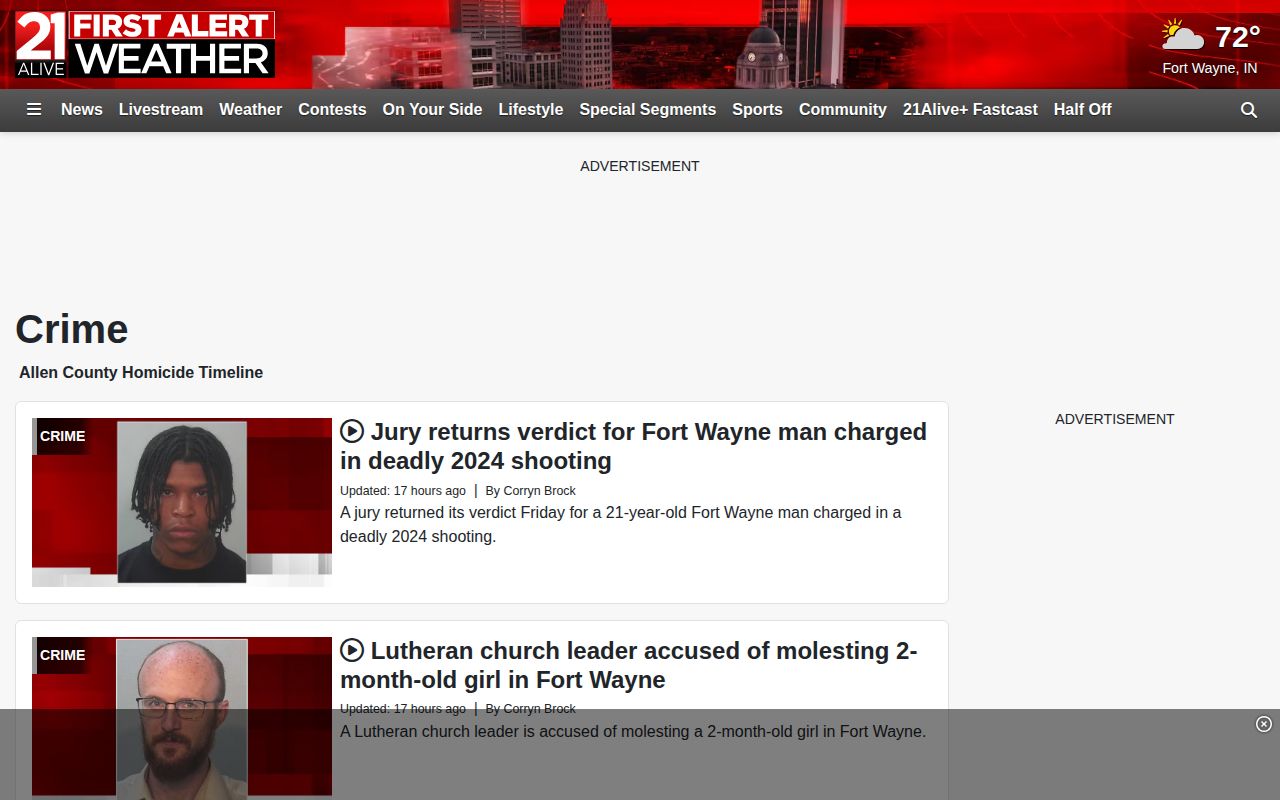
Scrolling its mix of timestamps, bylines, and shifting image types makes one thing clear. Every report still has to be traced back to the agency or court record behind it.
Three Allen County Log Systems
Three separate public log systems serve Allen County. The sheriff's activity tool takes start and end dates. It covers roughly a rolling year and lists incidents countywide with no names or images. Fort Wayne runs its own police activity log for city calls. New Haven publishes a daily calendar of events with the time, call nature, and a block or intersection, searchable by date and keyword. But it shows no names, outcomes, or booking photos.
Huntertown is different. The town has no independent arrest log and depends on Allen County Sheriff's resource officers. Those boundaries matter when a headline names a place. A Fort Wayne event sits in the FWPD system. A New Haven call lands in its calendar. A sheriff-handled incident belongs in the county log. Once an adult enters the Allen County jail, the sheriff roster becomes the next stop, no matter which agency started the case.
Note: An activity entry shows a reported response, not a booking, criminal charge, present jail stay, or finding of guilt.
How Allen Mugshots Reach News
Booking photos get made at intake. Allen County jailer materials list detainee photography among booking duties. The official current-inmate results even include an image column. From there a picture travels. A newsroom might get one through an agency release, a records request to the custodian, or material tied to a court filing. Indiana's Access to Public Records Act governs those requests, and the state Public Access Counselor has issued guidance on access to warrants and mug shots. Nothing in the law forces an outlet to publish every image it can obtain.
Editorial choices explain why pictures differ so much. An arrest story may carry a sheriff-supplied booking shot. An investigation may run a scene photo or a police handout. Court coverage leans toward the courthouse, an attorney, or a file image. A follow-up story may drop the booking photo even after an early report used it. Check the caption and attribution before assuming a face came straight from the Allen County roster. The Journal Gazette Police/Fire section shows this mix well, blending police, fire, charging, and court coverage in one place.
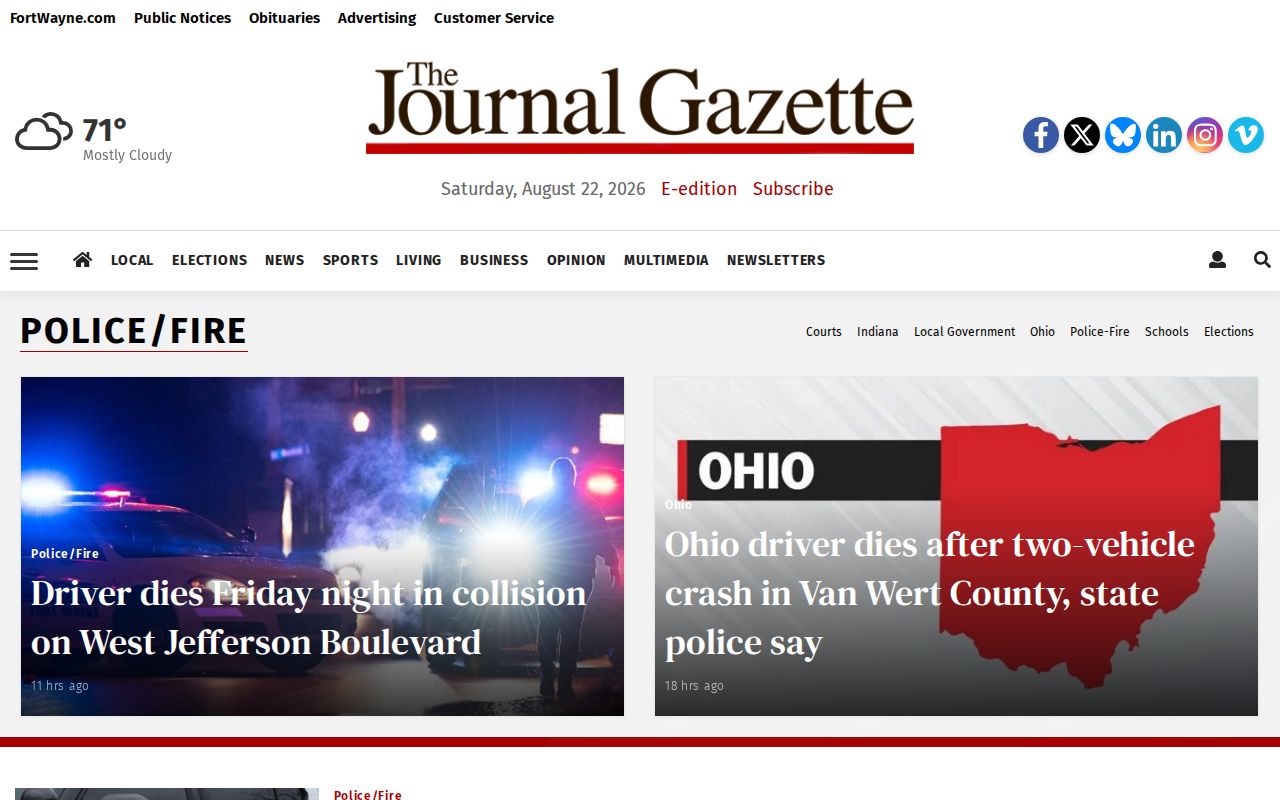
Note: that editorial stream is not a roster, and some archive stories sit behind a paywall, so the official records remain the way to verify any case.
Private Allen Mugshot Collections
Private sites offer another route to Allen County booking material. Busted Newspaper posts photo entries with names, booking dates, charges, and often bond amounts. RecentlyBooked pushes a rolling 30-day window with several refreshes a day. Arrests.org lays out photo cards, booking dates, charges or statutes, bond figures where listed, view counts, and daily links. None of these cadences are promises. Treat them as leads, not proof that someone sits in a cell right now.
Older collections need even more caution. Mugshots.com carried an Allen County section built around 2011 through 2013, making it a historical archive rather than a current-arrest feed. Mugshots.zone showed no Indiana Allen County section. Searches there land on Allen County, Ohio, so don't mix the two. The 180 Justice material runs narrative and irregular too. All of it ranks behind the sheriff, police logs, and the courts.
Copied, delayed, or duplicated entries are common in private databases, and a case may end in dismissal long after the page goes up. News stories skip people for a simpler reason. Editors pick stories rather than list every arrest. Whatever the source, confirm names and dates with the official custodian, and let the court file settle the outcome.
Trace Allen News to Records
Start with the story itself. Jot down the exact name spelling, the agency, the reported date, the offense, and any case or incident number attached. Then work outward through sources whose scope actually fits the question. The Allen County booking and roster hub digs deeper into the county's search fields and its fallback for people already released.
- Open the named agency's official release or activity system. Confirm that the event date and place match the report, but do not treat an incident log as arrest proof.
- Search the sheriff's current-inmate roster by first name, last name, or booking date. A match can show present county custody, image, booking date, and details.
- If no current match appears, consider release or transfer. Allen County has no separate verified official daily, 48-hour, 72-hour, or weekly booking feed.
- Request the underlying record from its owner. City police hold their incident reports; Sheriff's Records holds sheriff-created jail booking material and photographs.
- Search Indiana MyCase for filings, hearings, and disposition. Match carefully because names can repeat and booked charges can change.
MyCase is the judicial sequel to any news story. It is not a mugshot archive. What you want there is the disposition, meaning the court's recorded outcome. County monthly inmate-detail snapshots add their own layer of context. They cover jail dates, charges, status, and days spent locked up. No photographs, though. They are not a live booking feed either.